



23 Sep LDA Audio Tech deploys voice evacuation at the MADRING International Circuit
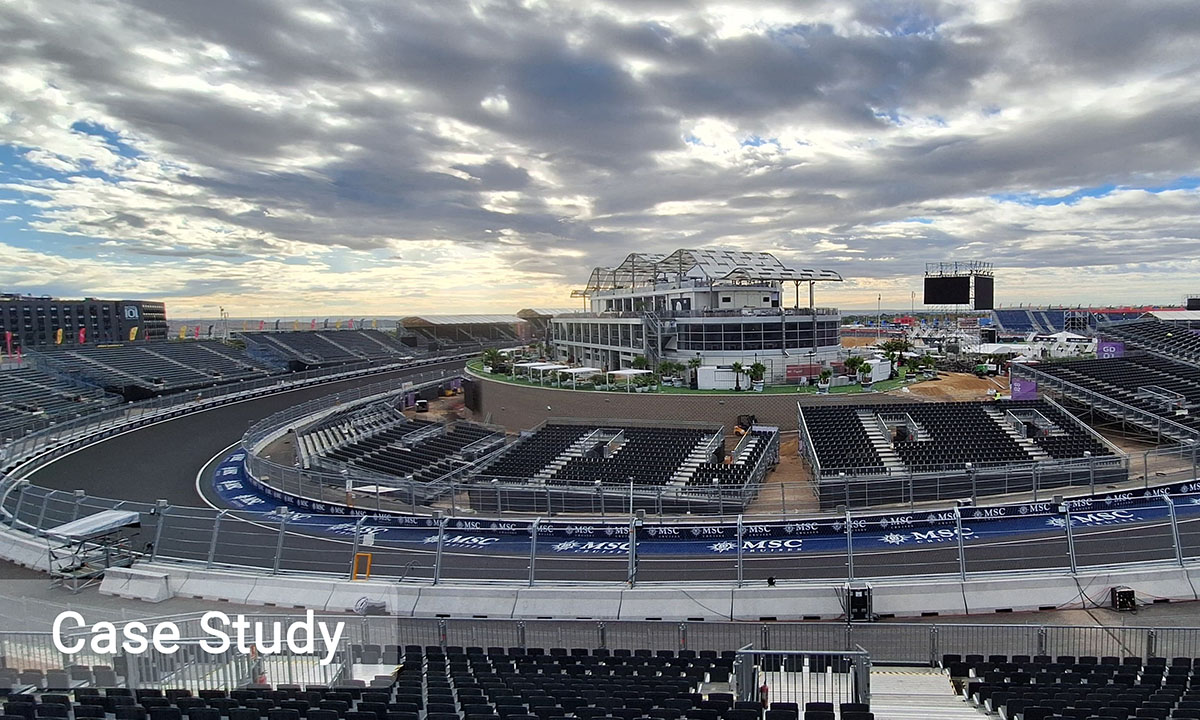
IFEMA Madrid has unveiled MADRING, the new International Circuit hosting the Spanish Formula 1 Grand Prix. LDA Audio Tech was responsible for designing and commissioning the public address and voice evacuation system for the entire venue, with capacity for 120,000 people a day, ahead of the first race in 2026.
The client and the context
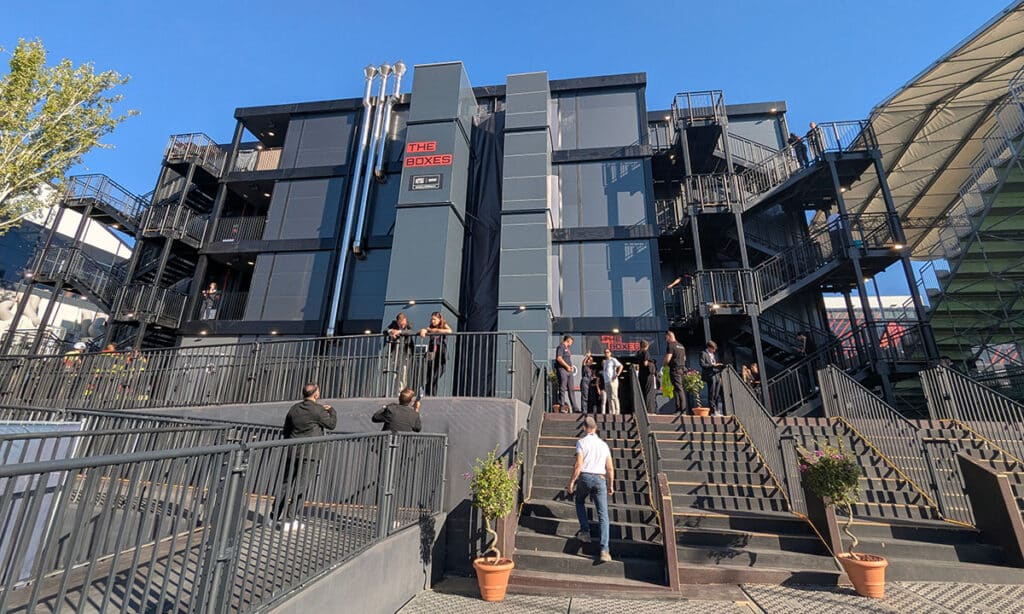
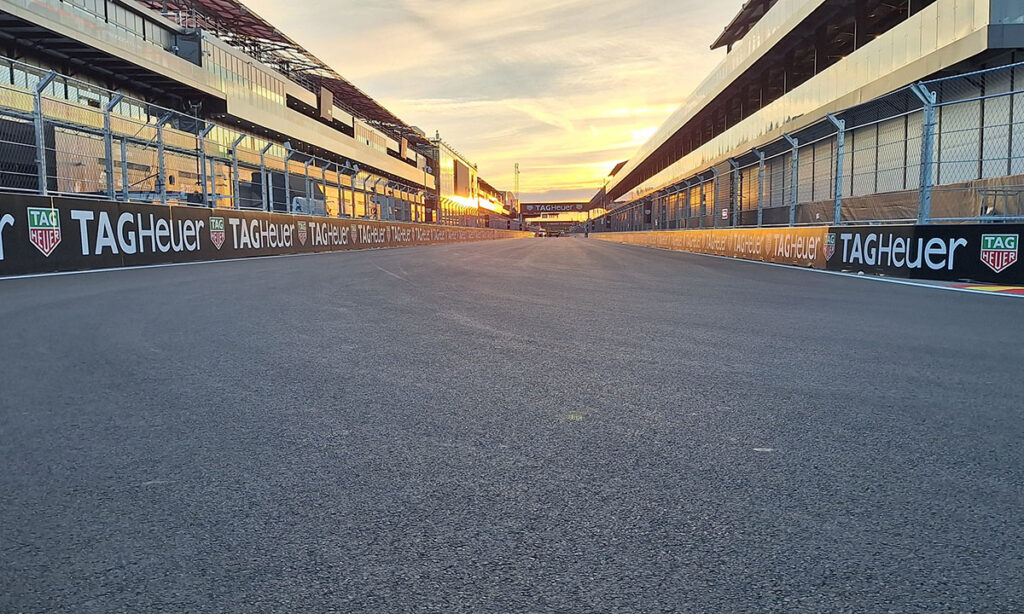
IFEMA Madrid is the promoter of the Spanish Grand Prix, under an agreement signed with F1 running until 2035. MADRING brings together the racing circuit, exhibition halls, Fan Zones and Hospitality areas within a single venue.
This multidisciplinary concept is one of the factors that turns this public address and voice evacuation project into a demanding piece of engineering, one that goes well beyond covering a racetrack. Safety has to be delivered across spaces with entirely different uses, capacities and audio infrastructure.
The challenge
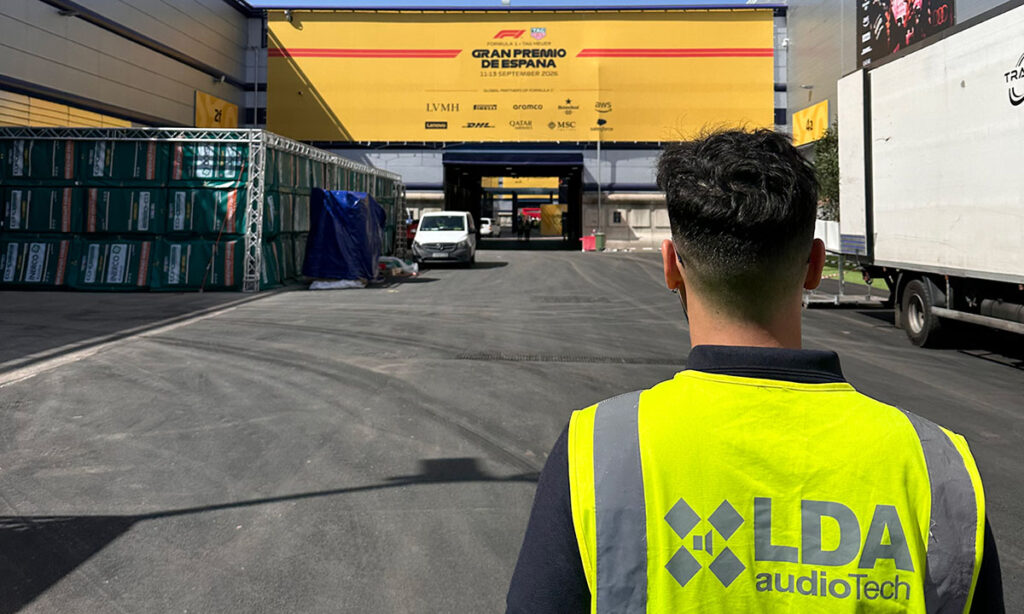
The project began with one major constraint on the table: the inaugural race date, set for the weekend of 11 to 13 September 2026, with huge international attention riding on it. Design, installation, configuration and commissioning of the whole system had to be completed in under two months, in the middle of summer, with no room for error.
Alongside the tight deadline came the technical complexity of the venue itself:
- Integrating the audio systems already in place in each area into a single voice evacuation system.
- Bringing all those areas under one evacuation architecture, regardless of each one’s own audio system.
- Making IFEMA’s facility evacuation work alongside race audio, operated by FIA (Fédération Internationale de l’Automobile) teams.
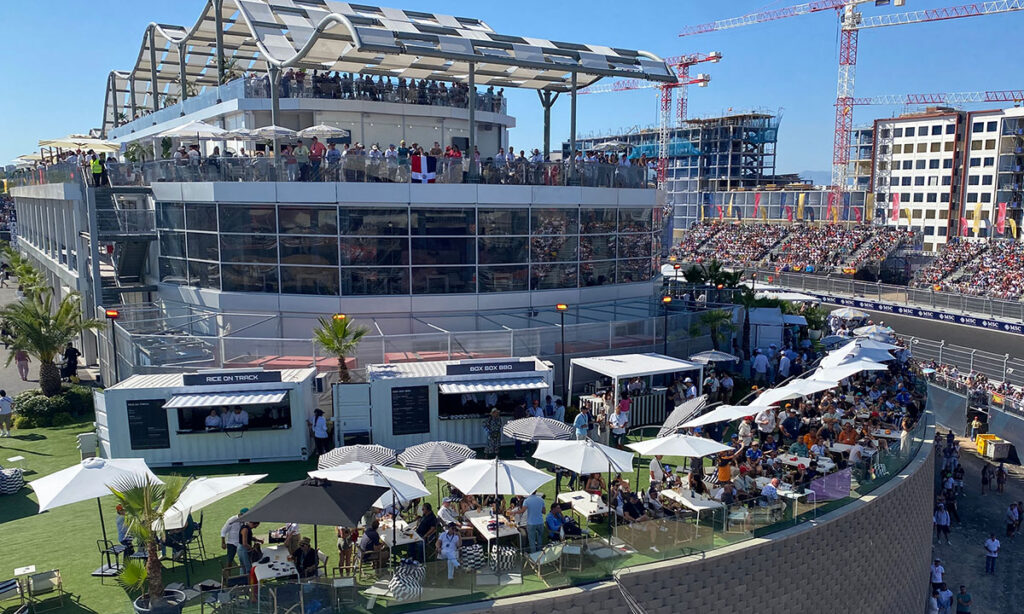
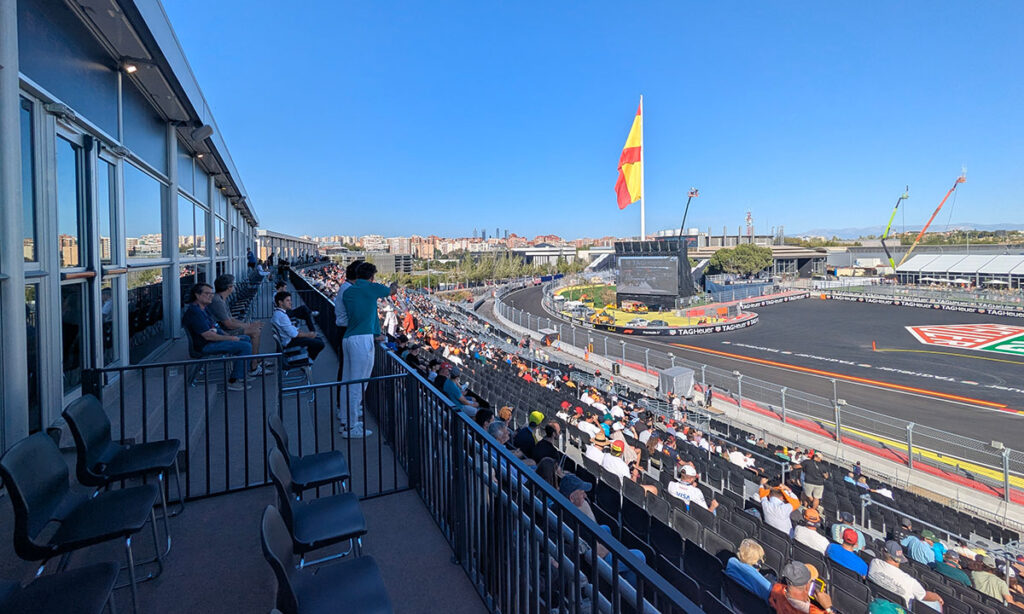
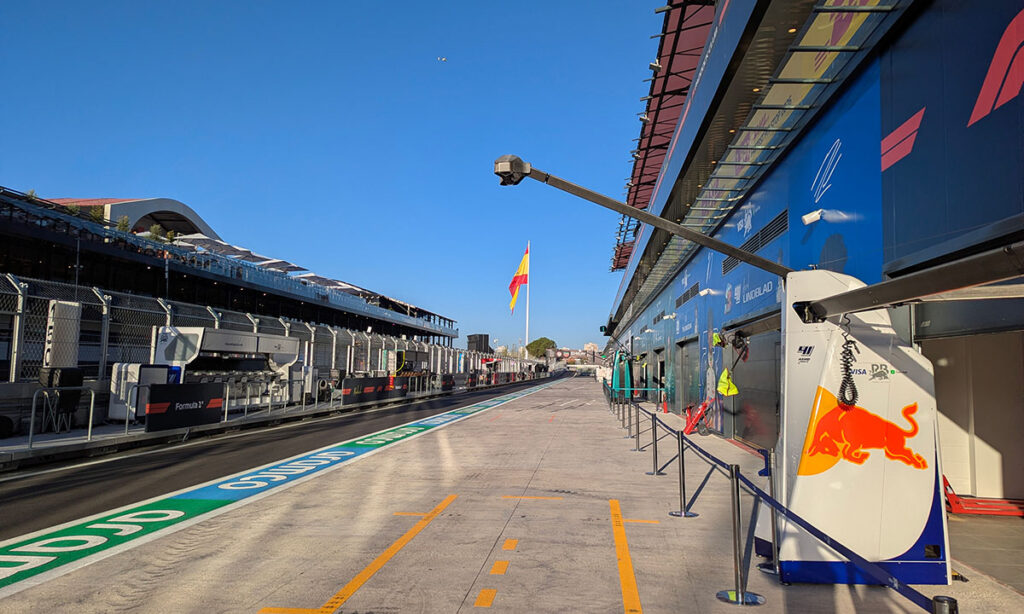
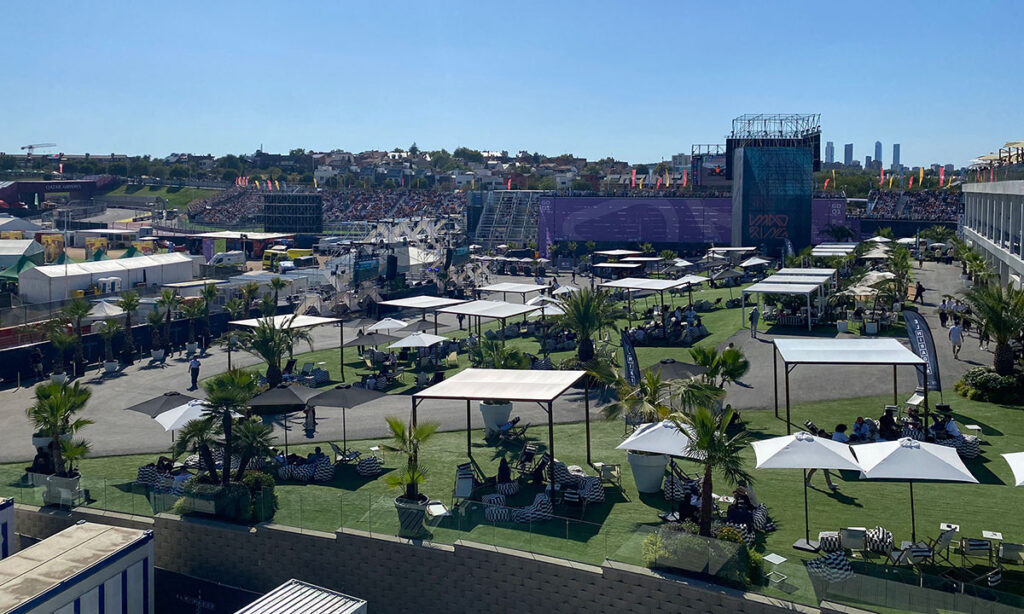
- Covering the circuit, grandstands, exhibition halls, Fan Zones and Hospitality areas with a distributed system.
- Meeting EN 54 requirements in full, to guarantee the safety of every attendee throughout the event.
No project of this scale is solved by technology alone. Bringing together interdisciplinary teams of specialists working as one was key to making it happen. LDA Audio Tech worked alongside integrators Ruybesa and DZ Engineering, with engineering, installation and commissioning running in parallel to meet the deadline.
The solution: one architecture, fifteen sites
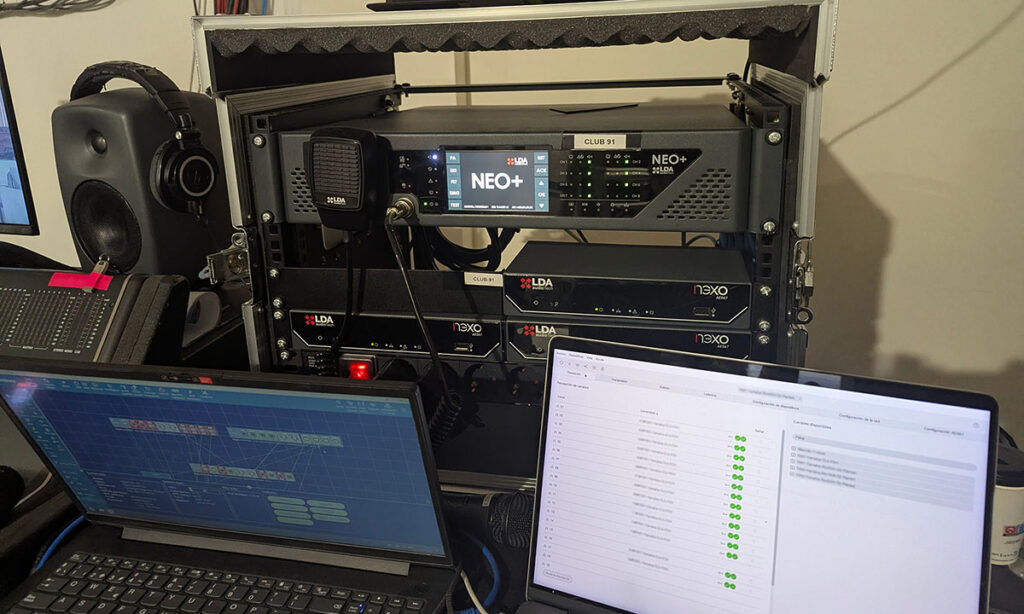
The system is built on NEO+ and organised into 15 NEO+ sites connected via NEXO Hub over a dedicated VLAN Ethernet network:
- 1 site at the circuit, the largest of them: 59 NEO-4500E+ extensions distributed across 20 racks along the track, with a NEO-8060+ as the system’s brain, backed up by a second unit. This is complemented by 456 Biamp Community R.35-3896-EN speakers covering the grandstands.
- 5 sites in Hospitality areas, integrating the audio systems already installed in each space into the evacuation architecture.
- 9 sites in Fan Zones, following the same integration approach.
- 2 control stations, main and backup, each with a VAP-1 panel connected to its own NEXO Hub Sender.
Synchronisation between sites is handled by AES67, distributing synchronised digital audio between locations spread across the venue.
On this foundation, the system allows evacuation routes to be defined by area and zone, matched to each space’s own prevention plans. Each zone receives exactly the message it needs, not a generic announcement repeated across the whole venue.
Results and validation
The system was tested and validated with the FIA and IFEMA’s security staff before the event. Intelligibility results comfortably exceeded the regulatory minimums:
- STI above 0.5 across the measurements taken.
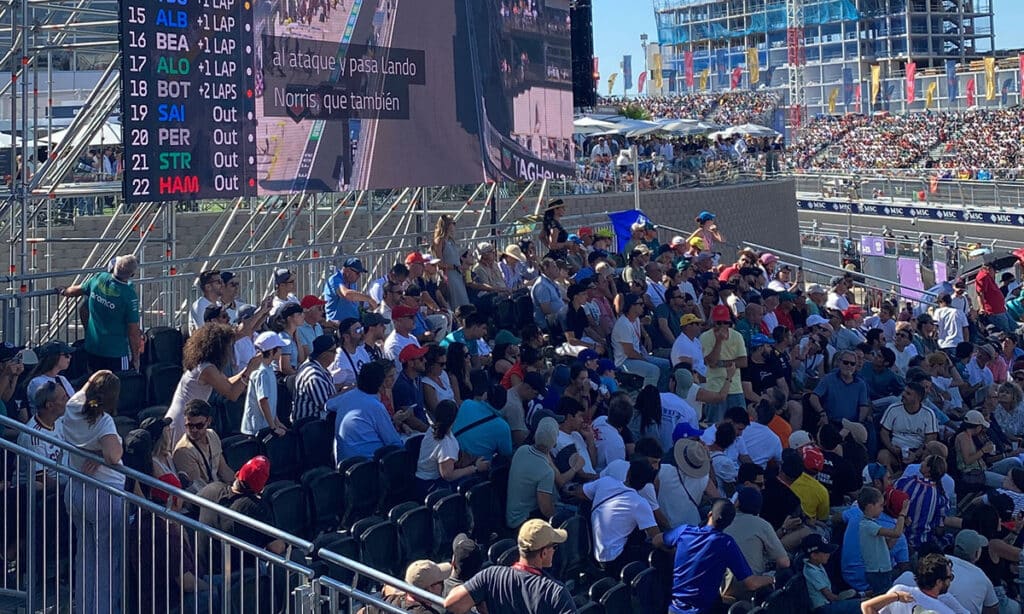
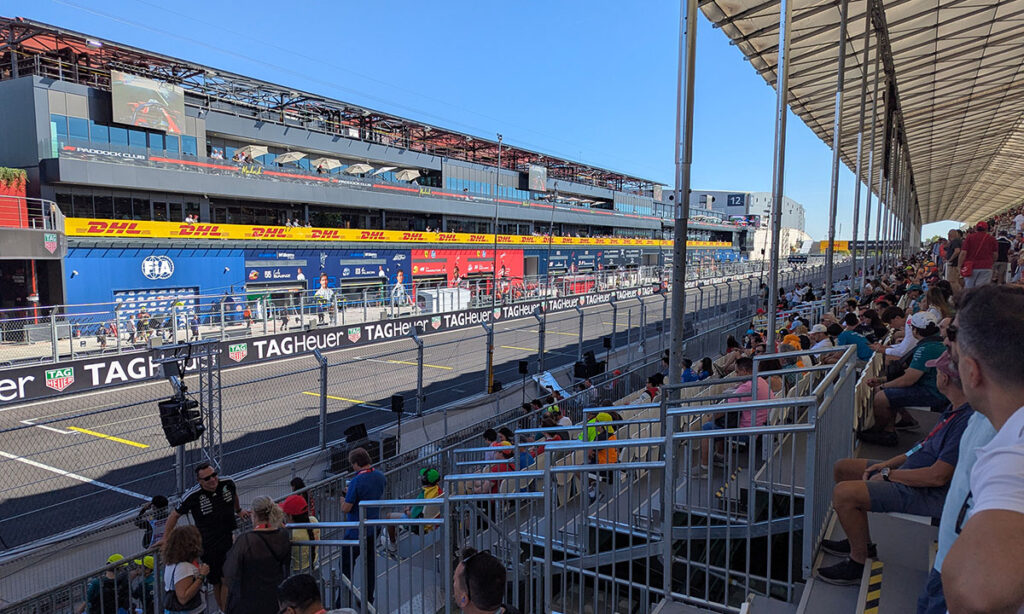
- Sound pressure levels above 100 dB across most of the grandstands, enough to cut through the ambient noise of a Formula 1 Grand Prix.
The full project, from design through to commissioning, was delivered in under two months and reached the race date without deviations.
The weekend of the first Spanish Grand Prix at this venue proved the result. The public address system performed reliably, delivering strong message intelligibility even in an environment as noisy as a Formula 1 race.
A reference in motorsport and major events
As a project, MADRING joins territory LDA already knows well. The public address and voice alarm system at the Valencia street circuit already carried the LDA Audio Tech name during the first two editions of the European F1 Grand Prix, in 2008 and 2009.
Nearly two decades on, the technology has changed completely, but the underlying challenge remains the same: getting the right message to thousands of people at the right moment, in an environment with no room for error.
The project in numbers
- 15 NEO+ sites (1 circuit site + 5 in Hospitality + 9 in Fan Zones).
- 20 racks and 59 NEO-4500E+ units at the circuit.
- 456 Biamp Community speakers in the grandstands.
- 2 control stations with VAP panel.
- STI >0.5 and SPL >100 dB.
- Under 2 months’ full execution.
- 120,000 people/day capacity.
- Client: IFEMA MADRID.
- Installers: Ruybesa and DZ Engineering.
FAQ: voice evacuation for circuits and multi-use venues
How is a voice evacuation system integrated with third-party audio systems already installed?
Through a distributed architecture that connects each site via NEXO Hub and synchronises it with AES67. Existing audio installations in each space are brought into the evacuation system without needing to be replaced, keeping their normal operation intact for all other uses.
What regulations govern voice evacuation in venues such as circuits or exhibition halls?
In Spain, the CTE (DB-SUA) classifies spaces intended for entertainment, sport, assembly or the transport of people, among other uses, as public assembly spaces. When those spaces exceed 500 m² or an occupancy of 500 people, RIPCI (RD 513/2017) requires the installation of a voice alarm system certified to EN 54-16 for control equipment and EN 54-24 for loudspeakers.
Is it possible to cover a circuit several kilometres long with a distributed public address system?
Yes, using racks distributed along the track and connected to a single control site. At MADRING, 20 racks with 59 NEO-4500E+ extensions cover the entire circuit with synchronised audio and centralised management from the control position.
What's the difference between evacuation audio and race audio at an F1 event?
They’re independent systems coexisting on the same infrastructure. Race audio is operated by the FIA for event narration and management. The voice evacuation system is independent, takes priority in an emergency, and is managed by the venue’s security operator.
What intelligibility levels are considered valid in an environment with heavy ambient noise?
Regulations require a minimum STI, with margins varying by space type. At MADRING, the system achieved STI values above 0.5 and sound pressure levels above 100 dB in the grandstands, above regulatory minimums, despite the noise generated by a Formula 1 Grand Prix.